Nutrition & Fuel
|
4 min read
|
Pace & Phase Editorial
A common point of confusion for active women is making the shift to "eating clean"—swapping processed foods for whole salads, nuts, avocado, and olive oil—yet experiencing no change in body composition or energy levels.
This disconnect occurs when we confuse Nutrient Density with Caloric Density. A meal can be exceptionally rich in micronutrients and antioxidants while simultaneously delivering a dense concentration of total energy.
The Science of Caloric vs. Nutrient Density
Nutrient Density: Refers to the micronutrient profile (vitamins, minerals, phytonutrients, fiber) per gram of food. Vegetables, berries, and lean proteins are highly nutrient-dense.
Caloric Density: Refers to the total energy yield per gram of food.
Because of macronutrient molecular structure:
Carbohydrates & Proteins: Yield 4 calories per gram.
Dietary Fats: Yield 9 calories per gram (more than double the energy density).
Dietary fats are vital for cell membrane integrity, hormone synthesis, and fat-soluble vitamin absorption (A, D, E, K). However, because liquid oils, seeds, and nuts have almost no water or air volume, their energy density is concentrated.
The Mechanical Satiety Paradox
Why can you eat a 900-calorie salad topped with nuts, seeds, cheese, and olive oil dressing and feel hungry 2 hours later?
Fullness is governed by two main physiological mechanisms:
Stomach Stretch Receptors: Physical volume stretching the stomach walls triggers vagal nerve signals to the brain to stop eating. Low-calorie, high-volume foods (like leafy greens, cucumbers, and berries) excel at this.
Hormonal Satiety (PYY and CCK): Digestion of protein and healthy fats stimulates gut peptides that signal long-term satiety.
When a salad relies heavily on concentrated liquid dressings and small nut toppings for its calories rather than physical food volume and lean protein, it delivers high energy with minimal stomach-stretch volume.
How to Balance Your Bowls
You don't need to eliminate healthy fats. Simply use structural portioning:
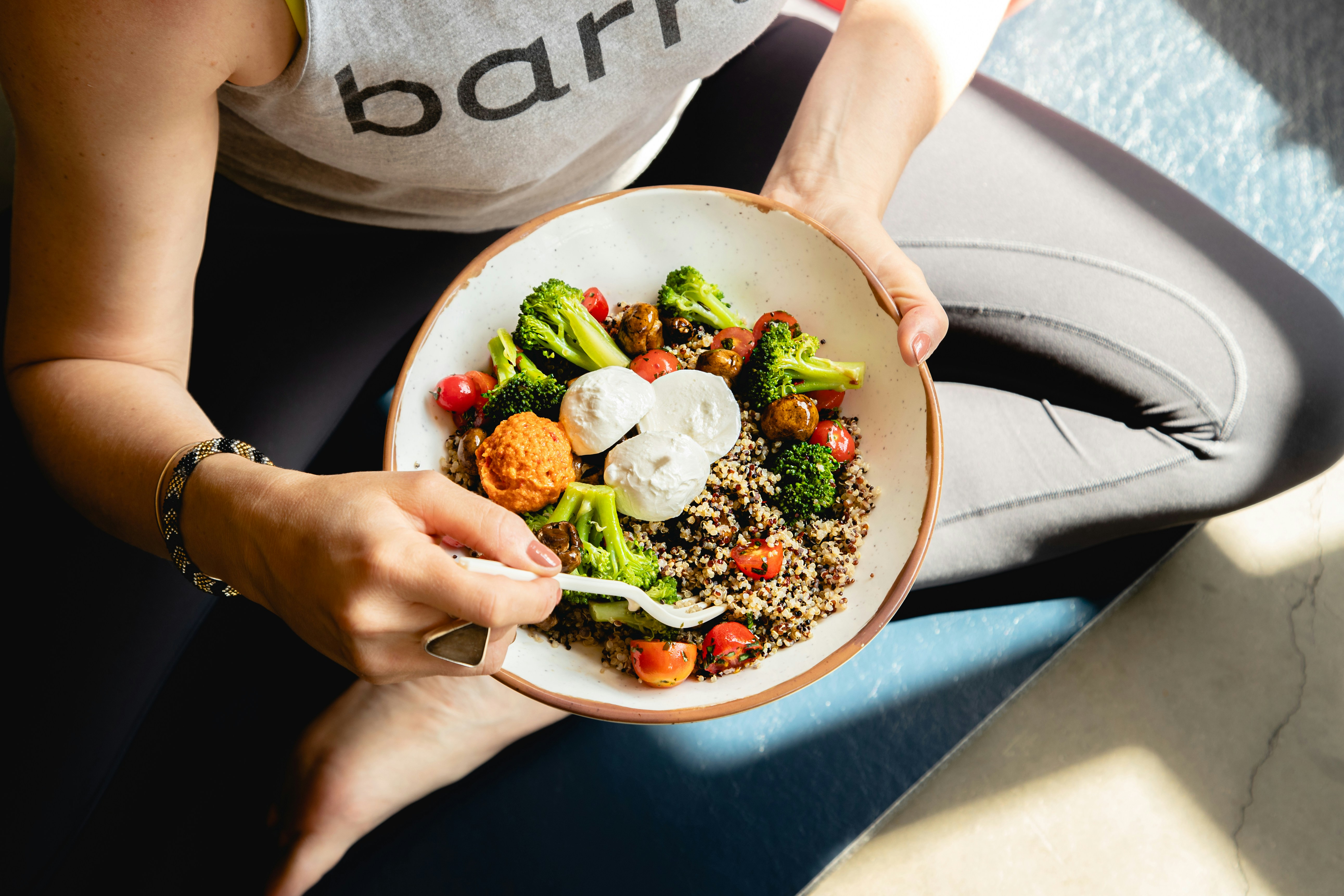
Anchor Volume: Fill 70% of your bowl with high-water, fibrous vegetables (spinach, arugula, cabbage, cucumber).
Anchor Protein: Add 25–35g of lean protein (chicken, shrimp, tofu, tuna) to maximize the Thermic Effect of Food (TEF) and trigger hormonal satiety.
Measure Concentrated Fats: Use 1 tablespoon of olive oil or dressing rather than pouring directly from the bottle, and choose one primary fat topping (e.g., avocado or seeds or cheese).
How Pace & Phase Keeps Portions Simple
Pace & Phase helps you build nutrient-dense, calorie-conscious meals that fuel your performance without stress or restrictive tracking.
Key Vocabulary
Caloric Density: The total energy content (calories) contained per unit weight or volume of food.
Nutrient Density: The concentration of essential micronutrients, vitamins, and minerals relative to caloric content.
Satiety Index: A measure of a food's capacity to induce fullness and suppress subsequent hunger signals.
Thermic Effect of Food (TEF): The energy expended by the body to digest, absorb, and process nutrients from a meal.
Adipose Tissue Accumulation: The storage of excess biological energy as body fat when caloric intake exceeds total daily expenditure.