Workouts & Movement
|
4 min read
|
Pace & Phase Editorial
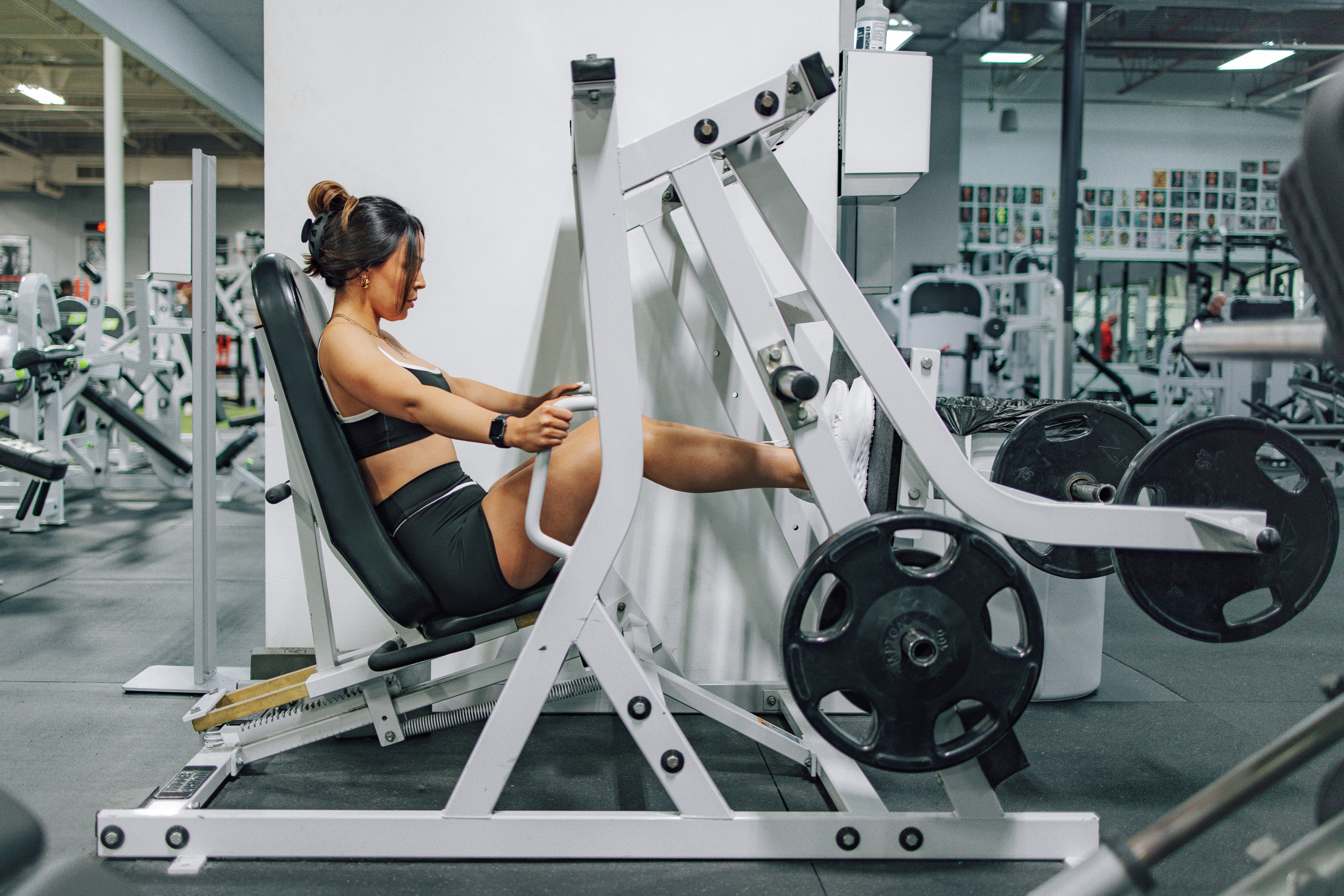
Have you ever walked into the gym expecting to smash a squat workout, only to find that the weight you lifted effortlessly last week feels like a 100-pound boulder?
In traditional fitness programs, failing to hit a prescribed weight on a spreadsheet is labeled as a bad workout. But female biology does not operate on a static 24-hour cycle. Your hormone levels, joint laxity, glycogen storage, and stress levels fluctuate continuously across the month.
Trying to force fixed workout numbers when your body is under-recovered is a direct path to injury and burnout. The solution is Auto-Regulation using RPE.
What Is RPE (Rate of Perceived Exertion)?
RPE is a subjective scale from 1 to 10 that measures how hard a exercise set feels right now, in this specific moment:
RPE 6: Light to moderate effort. You could easily do 4 more reps (4 Reps in Reserve / RIR).
RPE 7: Moderate effort. You could do 3 more reps (3 RIR).
RPE 8: Hard effort. Comfortable challenge. You could do 2 more reps (2 RIR).
RPE 9: Very hard effort. You could squeeze out 1 more rep with good form (1 RIR).
RPE 10: Maximum effort. Zero reps left in the tank (0 RIR).
Why Auto-Regulation Works Better for Women
When you train using RPE instead of fixed weights, your workout adapts to your biological reality:
On Day 10 of your cycle (high estrogen, high energy), 100 lbs on a squat might feel like an RPE 7. You feel strong, so you safely add weight.
On Day 26 of your cycle (high progesterone, elevated core temperature, lower neuromuscular drive), that same 100 lbs might feel like an RPE 9. Instead of forcing yourself to add weight and risking lower back injury, auto-regulation instructs you to lower the weight bar to 85 lbs so it matches the target RPE 7 stimulus.
As strength coach and sports researcher Dr. Helen Kollias notes:
"Auto-regulation preserves the physiological stimulus of a workout without pushing the athlete into central nervous system overload. It respects daily biofeedback over rigid programming."
How to Use RPE in Your Next Session
Instead of writing "Squat 100 lbs for 3 sets of 8", write "Squat 3 sets of 8 reps at RPE 7-8".
Warm up, select a weight, complete your set, and ask yourself: "How many more clean reps could I have done?" If the answer is 2, you hit an RPE 8. Adjust your weights up or down accordingly for set two.
How Pace & Phase Supports Your Auto-Regulation
Logging your RPE allows you to see patterns across your cycle. The Pace & Phase workout logger features built-in RPE guidance, helping you honor your strength variations without guilt while keeping long-term progressive overload moving forward.
Key Vocabulary
RPE (Rate of Perceived Exertion): A numerical scale from 1 to 10 used to measure how hard a workout set feels in real time.
Auto-Regulation: Adjusting workout weight, sets, or reps dynamically based on daily physical readiness rather than a rigid plan.
RIR (Reps in Reserve): The estimated number of additional repetitions you could have performed before reaching complete muscle failure.
Central Nervous System Fatigue: Systemic exhaustion of the brain and spinal cord pathways that reduces muscle strength and coordination.
Neuromuscular Efficiency: The ability of your nervous system to effectively recruit muscle fibers to produce force.


