Founder's Notes
|
4 min read
|
Katya L., Founder

Open my kitchen cabinet and you'll find exactly five supplements. Not twenty. Not a rainbow of bottles promising glow, shred, and eternal youth — five, and I can tell you the job description of each one in a single sentence. I think that matters more than the list itself, because the supplement industry has a business model built on a confusion it created: it wants you to believe these bottles are the main event.
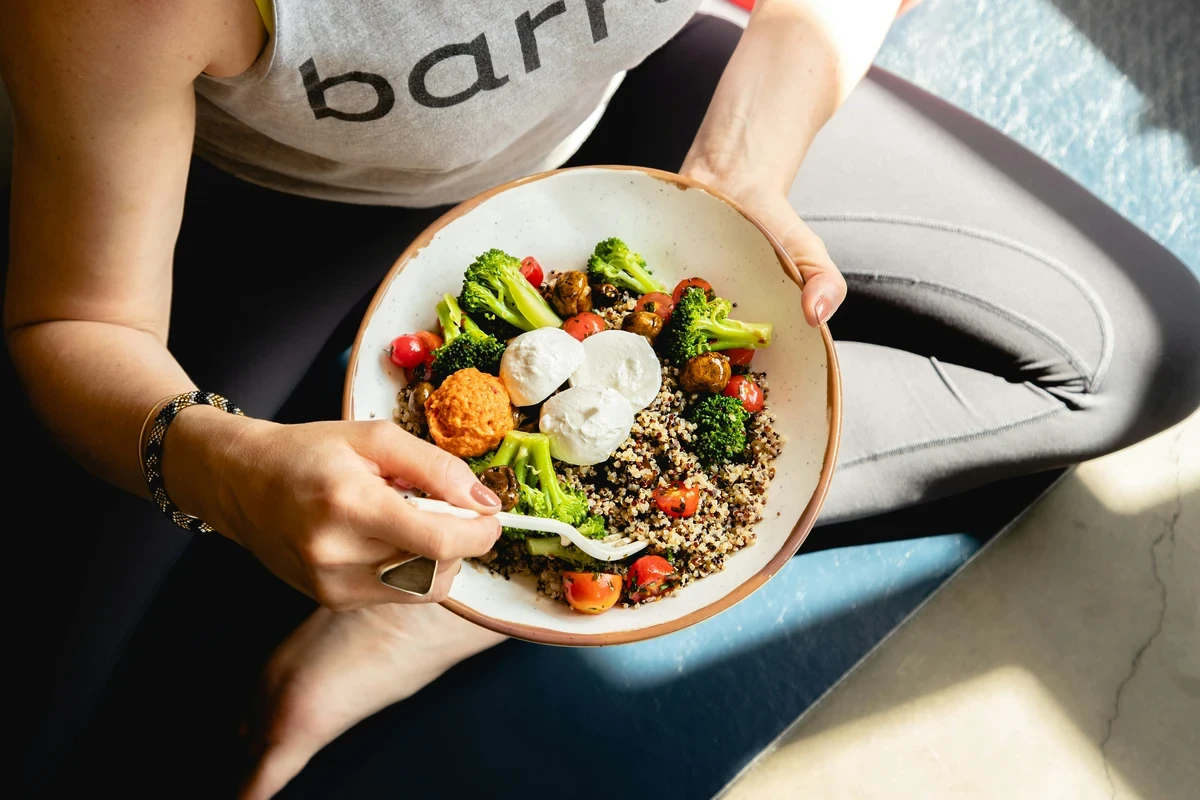
They're not. They're the supporting cast. And a supporting cast only works when the lead actor — actual food — shows up.
The five, and why each one earned its place
Here's the honest reasoning behind each.
Collagen + vitamin C
I take this one for joints and skin, and there's a detail most people miss: your body can't weave collagen without vitamin C, so collagen powder taken alone is like buying bricks and forgetting the mortar. (If you already eat plenty of fruit and vegetables, you're likely covered — this pairing matters most when vitamin C runs low.) I wrote about this properly in this article, including the part the industry doesn't put on the label — collagen only earns its keep once your baseline daily protein is already covered. If you're under-eating protein, your body will spend those expensive peptides on survival long before your skin sees any of them. So this one sits on top of real meals, never instead of them.
Unflavored protein powder
This is my workhorse, and the "unflavored" part is the whole trick. A scoop has no taste, which means it disappears into anything: morning aots, coffee, a creamy sauce for chicken pasta. Women over 30 need roughly 30 grams of protein per meal to reliably trigger muscle repair, and I don't know about you, but I'm not eating five eggs every morning for the rest of my life :) The powder doesn't replace lunch — it rescues the meals that would otherwise land at 12 grams and leave my muscles waiting.
Creatine monohydrate
The most studied sports supplement in existence, and somehow still fighting the reputation of being a "gym bro" powder. I take 5 grams daily for the same two reasons I wrote about here: muscle and brain. Women naturally carry lower creatine stores, and the brain is an energy hog — about a fifth of everything you burn at rest. No loading phase, no cycling, just a small daily dose, the way you'd take a vitamin.
Vitamin D3 + K2
Call this my bone insurance policy. D deficiency is almost a default setting for women who work indoors, and K2 is the quiet partner that helps direct calcium into bone rather than letting it wander. Unsexy, unglamorous, and exactly the kind of thing you appreciate at 60. I'm in my late 30s, and I'm already prepping my bones for the decades ahead.
Omega-3s
Brain food, in the most literal sense. DHA — the omega-3 your brain actually hoards — is a structural component of brain cell membranes, and most of us don't eat fatty fish often enough to cover it from diet alone.
The pleasant side effects are real too: the same DHA is concentrated in your retinas, EPA helps keep blood triglycerides in a healthy range, and randomized trials have shown omega-3s improving skin hydration, barrier function, and elasticity — the famous "omega glow" isn't entirely marketing. This one is pure gap-filling.
The rule underneath it all: add, don't replace
Notice the pattern: every single item on this list has a specific, narrow job, and every single job assumes the foundation is already there. Protein powder assumes you eat meals. Collagen assumes you eat protein. Creatine assumes you train. D3+K2 assumes you lift heavy things sometimes. Omega-3s assume the rest of your fats aren't a disaster. Take the foundation away and the whole stack becomes expensive urine with good marketing.
That's the principle I wish someone had handed me years ago, before I bought my first hopeful bottle of something: supplements don't fix a diet, they complete one. Add, don't replace.
This is what I take, by the way — not a prescription. Bodies differ, medications interact, and your doctor gets a vote. But if your cabinet looks like a pharmacy and your meals look like an afterthought, the highest-leverage supplement you can add isn't in a bottle.
P.S. There's a part-time resident in the cabinet too: magnesium glycinate. Not daily — I reach for it before bed when my mind won't quiet down, after brutal training days, or during my period when cramps show up. The full guide to magnesium forms is here.